


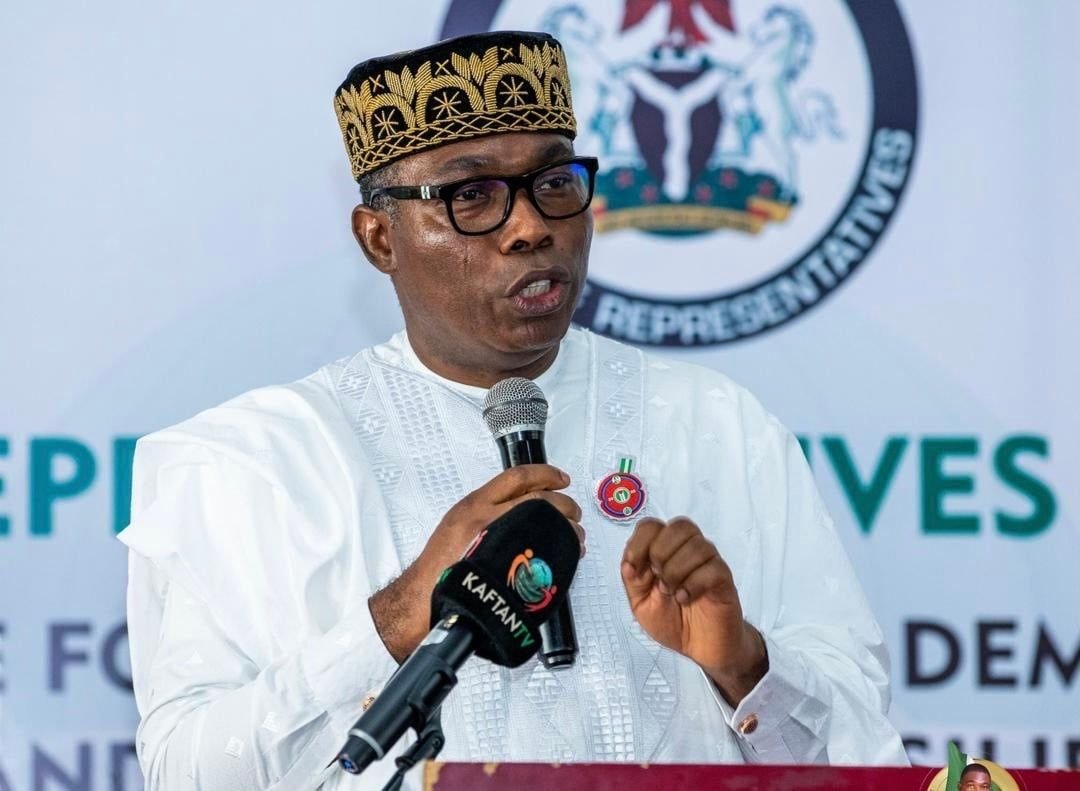
The Presidential Candidate of the Social Democratic Party (SDP), Adewole Adebayo, has pledged to install between 11 and 15 kilowatts of solar power on every Nigerian’s roof within 11 months of taking office if elected in 2027.
Adebayo made this pledge during an interview on Arise Television’s ‘Prime Time’ on Tuesday.
According to him, his administration would establish solar-panel manufacturing plants nationwide and train Nigerians in the installation and maintenance of solar energy systems.
He also mentioned that he had previously advised the government on energy issues and conducted solar technology experiments in his hometown, where he trained approximately 2,000 people.
“I promise that between 11 and 15 kilowatts of solar power will be installed on every roof within 11 months,” he declared.
READ ALSO
- 2027: El-Buba Backs Adebayo, Says SDP Candidate Can Fix Nigeria
- Adebayo Reacts To Datti’s Comment On 2027 Presidential Candidates
- 2027: If Elected, Gas, Petrol, Aviation Fuel Will Not Go Past N200 Per Litre – Adebayo
“I carried out a solar experiment in my hometown, training around 2,000 individuals because I manufacture the solar panels myself and produce lithium batteries.”
Adebayo noted that solar-panel factories could be set up in Nigeria through partnerships with countries like China, Turkey, and India, with Nigerians being trained to operate them.
He explained that the proposed solar clusters would supply electricity for basic household needs and generate employment.
“By implementing this, we can create jobs and generate up to 32,000 megawatts of power from these clusters. This decentralisation would help us manage the national grid more effectively.”
He emphasised that the national grid should serve as a backup, drawing power from these clusters in case of failures.
Additionally, he suggested that the government could make strategic investments in key sectors such as aviation and manufacturing—favouring operating and maintenance contracts over full privatisation.
Regarding energy security, Adebayo highlighted the need to prioritise domestic refining and combat crude oil theft, citing these as critical factors affecting economic growth and energy stability.